Sunday, 15 April 2012

Elements of Game Design part three: Character


Mitsurugi (Soul Blade)
When I think back to my favourite characters I think back to the time when I was a kid. Since I was brought up playing video games and not as much on cartoons and TV, it’s only natural that I would think to video game characters and not TV or Film characters. Playing on games such as Final Fantasy VII, Metal Gear Solid, Soul Blade and Zelda at a young age helped shape the character I was through school, high school and college. As I grew older, many more memorable game characters would in a way mould me into the person I am today.

I don't need to tell you who this is...
I also watched cartoons and films such as Batman. There are many others but I chose Batman as he is one of my most memorable characters as a child. He is a good example of character design in my personal opinion. He is cool, strong, clever, dark and a hero. One of the biggest reasons we are able to connect with him is because we all know his real identity in which he conceals even to his allies (with a few exceptions).

Characters in games are representatives of you and the inhabitants of the in game world. He/she/it would have to be likeable, interesting and cool to play as! But these days, enhanced visuals are not enough for the player to be fully immersed within the gaming world. Mainly, with the story of the game, most of the time the game character’s back story and personality will be fleshed out as the game progresses. 
Every detail of the character must be considered, from the way he moves and acts, to the way he speaks and reacts. 
Solid Snake

A good example of a character design would be Solid Snake from Metal Gear Solid. For me he is a character that I can believe in his world. The way he speaks with a gruff voice, the way thinks as a soldier and the way he smokes on stealth missions says a lot about him as a character already. He has a ton of backstory and history bridging from the older games that all link together. The stories often unveil more about his past and his connections to other characters, provoking the player’s interest in Solid Snake’s mysterious past events. Characters in the game all have a have a different view of Snake and react to him in different manners such as Meryl treating him as a war hero and Grey Fox treating him as a mortal enemy.

In a 3rd person or top down view, the character you play is your avatar and your connection to the game world. A character that is likeable keeps me interested in playing the game as I can really connect to that character’s personality and want to play their role within the game. In fighting games, character design is also very important, but there will be the majority that will choose characters on their ease of use and tier list. 
In first person shooters like Call of Duty, there isn’t anything that generally makes you connect with your character; it is just a shell that portrays you as a player on the battlefield. In the multiplayer however, I find that the way you as a character is defined to other players is you play style and load out choice.
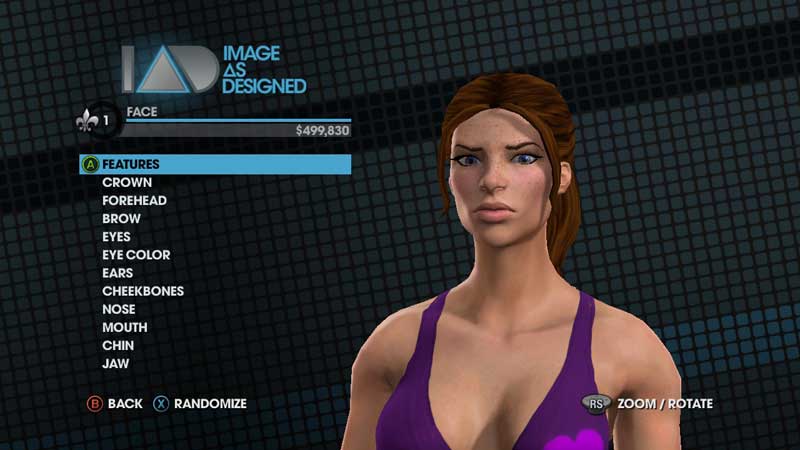
Saints Row III - Indepth customisation
It seems that these days, customisation is getting big and a predetermined visual look of your character isn’t as important. For example, Saints Row III lets you customise you character completely from skin colour to voice and gender. Even with an extremely large amount of customisation choices, the backstory of your character is already determined within the beginning of the story at least. You get to customise your gangs and cars and even your taunts.

Character design in multiplayer games is all about the customisation these days. It’s popular among many gamers that they bring in their character into the single player.
I personally love customisation within game characters and would love to see it expanded upon in the future. 
However, I also love many characters in the past and even in recent games which have impacted my life and mannerisms in some way. I wouldn’t like to see original characters created by designers trashed in favour of pure customisation. But there really isn’t any worry for me about that stuff yet!

Saturday, 14 April 2012

Elements of Game Design part two: Art Direction for Games


Games are being created in all sorts of interesting visual forms. From games such as Call of Duty 4 and its first person cinematic feel, to Marvel VS Capcom 3’s 3d Comic styled visual. However games weren’t made like that just because the document said so. I every game needs artists to work on the visual of the game, and every game needs someone to hold all the artists together in a collaborative effort. This is where the art director comes in

Call of Duty 4, A very brown and gritty game
Being an art director isn’t about being the best person at drawing or painting. An art director consists of much more. The Art director is more of a visionary and is responsible for pushing the visual direction of the game. From choosing the palette to affect the mood of the area, guiding artist to the amount of detail models should have to how many characters should populate the level and the type of terrain on the floor. The art director shapes the art design of the game by closely working with the other artists of the company.

Ultimate Marvel VS Capcom 3, a VERY vibrant game
An art lead is someone who helps the other artists technically and artistically. They guide the artists to create what the art director and game designer envisions. Lead artists would also manage the artists and would look to keeping the group working comfortably and efficiently.
An art director must be creative as well as being able to explain and show the kind visual feel and direction they want. By working closely with the art lead, they can ensure that they get exactly or close to the visual they want.

Many games of the present have a very high cinematic theme towards them. Particularly in games such as Call of Duty and Uncharted, the cinematic cut scenes make it seem almost like a movie. It may be with the use of professional actors used with motion capture software to give games very convincing movements and along with their voice acting that gives many games of today that same feel we get from a film. I also find that it comes to as no surprise when many games have employed or collaborated with professional film writers and directors.

Uncharted 3, A very cinematic game!
I was at the Eurogamer convention at the end of 2011 and I attended an Uncharted 3 Q&A as well as showing off the the game. They had the actor Nolan North, who voiced and did the motion capture for Drake and started to talk about how he worked and what he did, showing a video behind the scenes of his acting and voicing for the game. It was very interesting to see that they are hiring big time professionals and take it just as seriously as those in films.

Metal Gear Solid 4, a VERY cutscene heavy game!
When I think of a very cinematic game and cutscene heavy, I think of Metal Gear Solid 4. It comes to a point where the game, in my opinion had too many cutscenes and where gameply was a little dull. It was as if they were concentrating on giving the player a movie to watch. I find that although I enjoyed Metal Gear Solid 4, I felt like I was watching a movie with all the cutscenes. I remember the ending being extremely long, and I was bursting for the toilet and wasn't sure when it was going to end!

An art director within the film industry has a similar role as one within the gaming industry. An art director in films would attend meetings with other directors of the company. They would also assign tasks and roles to other members of their department and overlooking the creative decisions and budget.

An art director must be able to inspire and encourage his department as well as others to see his vision of the product. He must be able to see the bigger picture of the entire project and direct his department in the right direction and creating the right feel of the game.
If I am to ever become an art director I feel I must broaden my horizons with my creativity as well as work on my communication skills as I have a hard time getting across my thoughts and ideas to others.

Friday, 13 April 2012

Elements of Game Design part one: From Pong to Next Gen


As a gamer for most of my life, it comes to as no surprise that I have thought up many games that I wish that I could create. In my earlier days, I would often think about types of games based off of my favourite genres and would be nothing but a few doodles from my head.

What makes a game? A game is a set of rules that determines how the game will be played. Games back in the old days were still as much as any game of the present. Cinematics and music alone doesn’t make a game. Sure they help with immersing the player within the game world, but without it’s actually rule set and design, there is no game.

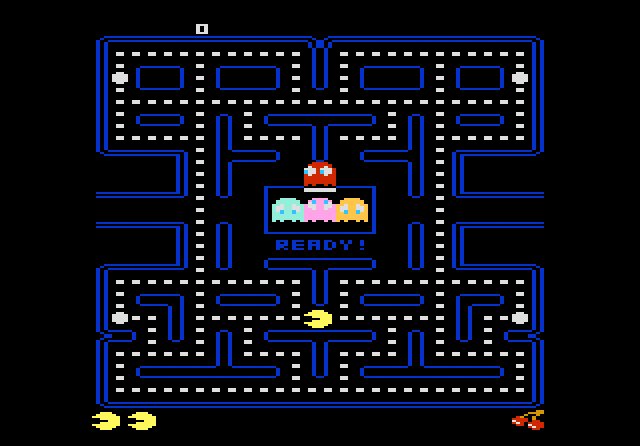
Pac Man
F.E.A.R
Comparing Pac Man and F.E.A.R, both completely different game genres and styles, they both have a set of rules which dictates the how the game is played.

A game designer is someone who would design the game’s rules before it is being produced.

A lead designer would be the one to ensure communication and overlook other designers. The lead designer is often the one to present the work outside of the designers and would also often be the world designer for the game.

Games mechanic designers are those who would balance out the games rules. They are also known as a system designer.

A writer would usually be hired as part time to narrate the game through just about everything such as the dialogue in the cut scene, tutorials and hints, etc. They often collaborate with the rest of the designers.

A game in the present day such as Halo 3 or Marvel VS Capcom 3 cannot be realistically made with only one person. It must have a team of designers, with someone to hold it all together for it to be created effectively.

Final Fantasy X. A very explorable game
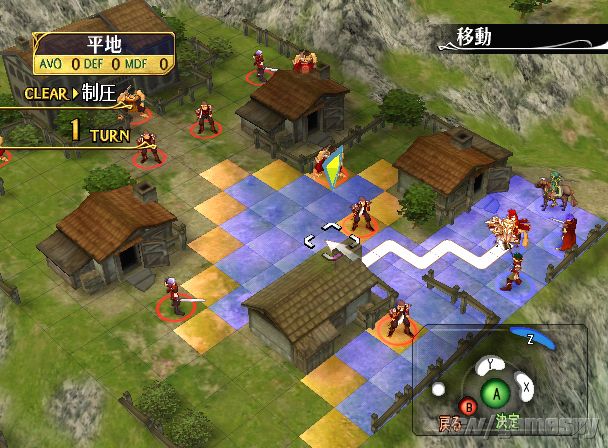
Fire Emblem: Path of Radiance. A very linear game.
So do I think different game genres require different design principles? I think to a certain extent with certain genres such as and RPG and a First person shooter, the rules must be written in a different way such as the limitations of what one can do within the game and the choices they can make which can differ greatly to other kind of genres. I find that this can be applied to the same genres as well. But in the end it all still boils down into a set of rules that the game designer creates. Final Fantasu X is a game where you can 'level up' and explore many areas and can usually re explore thoes areas after you have visisted them. It gives you a chance the power you characters and find hidden treasures. In Fire Emblem, you also level up and find secrets. However in this game you are unable to revisit areas and do not have a second chance of finding secrets or explore once the stage is over. They both have a levelling up system and both are designed to be suited for their own game and works differently.

What I personally think is important when I play a game is to see how well executed the game is. There are often times when I read up on a game and it sounds brilliant, only to be disappointed with its execution.
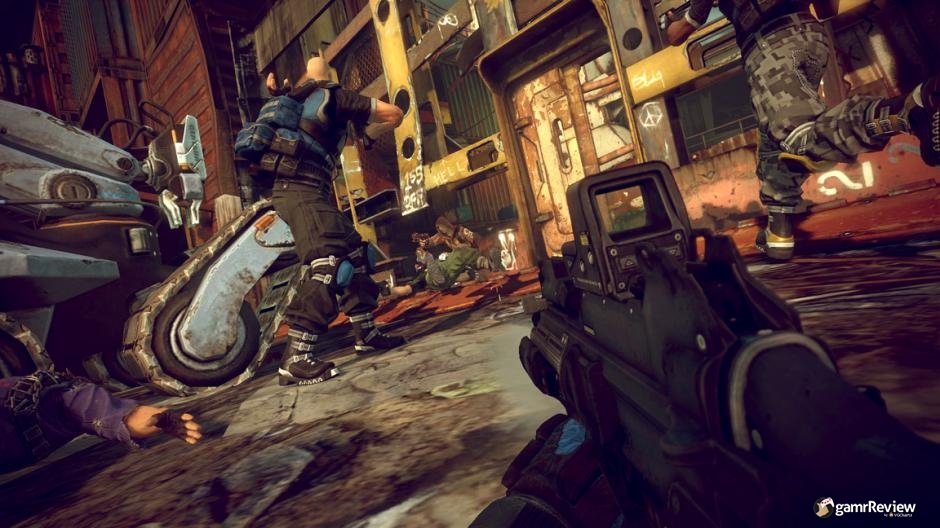
Brink in my opinion was poorly executed
An example recently for me would be a game called Brink. Although I still loved the game (I’m very easily amused with games with very random reasons) I found that the balance of some of the gameplay modes and the design of some maps were very unfair and poorly designed. It really broke the flow of the game and killed a lot of the fun for me and many others.
 

In my next blog, I’ll be talking about the art directions for games and what being an art director entails. :)

Monday, 9 April 2012

Environment Project - My progress

The scene I wanted to create was one of a vast desert that was once a grand ocean. A once sunken boat is one of the main focuses as well as the background. I wanted to show just how big the desert was and a ferry comparing the size with humans would give a good sense of scale to the characters.

Continuing on, I put the boat on the cliff to limit the player to the boat only, directing the player on his next chapter. By putting the ferry there, it gives a sense of scale of the size of the desert background. I feel that an RPG game that focuses very much on exploration and the game universe, was the right genre to base it on.

In this thumb I wanted to make the player want to have more than just the area they are limited to, using their imagination of what could be within the desert or beyond the horizon. As it was once a grand ocean, I thought about adding many things that could be found on the ocean bed.

I may include things such as bones from giant sea creatures or other sunken junk from the past. I will continue to experiment with other thumbs before the final.

Monday, 26 March 2012

Environment Project - Starting out with ideas

So, I’ve looked into how some game companies go about their environment designing, as well as my own thoughts. Now to see how it plays out.

I thought of various basic ideas for a scene and to possibly expand upon a few of them:

Desolate forest
Rich desert
Crowded street
Overgrown buildings
Sea coast
On a ferry
Car park
An experimental facility
A sinking/submerged submarine
An isolated island

So I was thinking of which game genre would best suit some of these ideas. For example, I find that the desolate forest idea could work well for a survival horror or an RPG, or a car park or ferry could work well with a 2D fighting game or a survival horror.

So now I’m faced with a problem, how to make my environment interesting. Trying to merge some of the ideas together would be a good start I guess. One thing I probably shouldn’t do though, is look at other games for ideas and inspiration as I could end up being very unoriginal (not to mention probably executed much more effectively that I could hope to imagine at this time).

I so some of the ideas I’ve merged together are:
The crowded street and overgrown (plant life) buildings
An experimental facility and submerged submarine
Rich desert and a ferry
Isolated island and sea coast

Out of all of those ideas, the one that interested me the most is the idea of a ferry and a rich desert.
I like the idea because I like the feel I got from thought of a ferry stranded out in the desert, giving it a feel that is has been stranded there for a long time as the perhaps once existed sea dried up. Or that it could be a ferry that travels on the sand, giving a rather fantasy feel to it.

So with this idea in mind I began to look into reference images to get a feel for this kind of environment on top of my initial thoughts. I pieced together images of wrecked ships and deserts to get a feel of how I could link the two ideas together to create an interesting environment.


Sunday, 25 March 2012

Environment Project - What makes a good environment?


Environments in games (and even in real life) have always fascinated me as far as I can remember within my gaming life. Curiosity has always gotten the better of me as I try to dig deeper into exploring and finding ways to break the boundaries of that which separates us from the unknown.

Whilst this fuelled my imagination with limitless thoughts for what could be within that theme and environment, I have never actually thought of how I would go about creating my very own environment. In the past I have thought of what kind of games would be cool and interesting to explore, but to actually build the place, I would have no idea on how to even begin that.
Thinking of places that have been interesting in the past such as exploring a vast and mystical sea shore filled with ancient fascinating sea coves and intertwined waterways, or a derelict city filled with many weather torn buildings would be cool to do, but would be rather unoriginal.

So where to begin? I decided to research into how some current gaming companies go about designing an environment and what factors are important and considered.

Reading the Brink developer diary, the use of colour helps contrast areas of the game between the two warring factions. As the player progresses through the story and enter a new environment, the atmosphere, colour palette and lightning conditions helps the player to understand or wonder about what the story is about and triggering certain emotions, leading the player into the next chapter or event changes, etc.
Ark Security launching an assault on resistance turf. Clearly indicated by colourscheme and theme


It is important that the environment tells a story through details. For example graffiti on the wall or wreckages with certain objects nearby to show that something has happened there before hand, etc.
With Brink, they intended to tell the story with cinematic sequences as well but I personally found the story telling to be very weak. I didn’t follow the story at all with the cinematic, nor was I immersed with environment as much as I usually would. I was however still visually pleased with most aspects of the game’s environments and surroundings.
Left 4 Dead. The safe rooms of each stage show that there are other survivors, showing their stuggles, personalities and adding to the overall atmosphere of the game.

Silent Hill also had their own way of telling a story of a character, which could also be related to the environment. Too much unimportant character details can divert the player’s eyes from the detail that should be noticed. Too much unnecessary detail in an environment can confuse the player or take away a certain feel if detail is lazily and randomly placed or even take away the believability of the game world.

Goldeneye N64. Facility stairwell leading to the toilets
A character can be easily recognisable with even the slightest detail and can tell a story about that character. The same could be applied to environments. The most memorable characters for me are those that aren’t swarmed with lots of little random details and have a clear silhouette such as Cloud Strife and his Large sword and spikey hair, I can recognise all the stages from Goldeneye 64, with very little detail but easily recognisable areas.
Not to say that designs with a lot of random unimportant detail are completely unrecognisable and shouldn’t be done cos it’s bad, I have found a lot of cluttered surroundings very enjoyable to explore and can still show a story. Something just as equally awesome could be done with very little detail.

I also looked into the reasons of what I personally like and find interesting within environments. I find it is very important that the environment fits with the theme of the game and the available actions to the player and how they can interact with the world. A good environment should give clear indications as to what the player can and can’t do. This could be because certain thing has happened in the game such as such and thus fitting with the theme.
Monster Hunter. Shows ambient life within the background that is inaccessable due to the river acting as a barrier. Monster roars and ambient noises can be heard in the background, indicating activity close by but unreachable. This shows that there is a much larger world than just the area you are in (and really makes me want to make me explore explore it!)
An environment reinforcing the role or background of the character, etc. could also give the player a sort of link between the characters and their world. Many games that I enjoy have areas that make me feel like there is a bigger world than there is in the box you are confined in, wanting more (to the point I will try to find a way out or even try to glitch the game and break maps :P).
In Halo ODST, there was one part in the game where you see dead Elites, killed by the Covenant. This indicates that there is an internal war that players don’t see throughout the game, but is known throughout the events of Halo 2 and 3, giving that pleasant easter egg and giving the player some emotional connection to the main Halo series. This gives an indication that there is more happening within the game world than the part you are playing.

A good example of taking away the believability of a gameworld was also from Halo ODST. In previous installments of the game, humans were never able to wield weapons such as the heavy melee weapons like the gravity hammar no matter how hard you tried to make them hold it. In ODST the player is able to wield the gravity hammer just as effectively as the Masterchief and his super human strentgh. Anotehr example would be the player, as an ODST able to regenreate his 'shield' by not taking further damage and waiting. Granted he can't recover his actual health, but humans within the past istallments weren't able to do this.

There is more to designing environments than just making it look cool. It must show many other things that are important. Here are some important key factors that I will be referring to as a sort of guideline for my designing process:
-The environment telling the player a story through important details within the scenes.
-Must be interesting and believable to the game world.
-Shows that there is more to the game universe than what the player is actually able to do, reinforcing the background and theme of the game world.
-Give clear indications with what the player can do and what it can interact with.
-As the player advances throughout the game, the environment should provide a narrative. Guiding and telling the player a story as they progress.
-Letting the player get a feel of what has happened without having to be there to witness it
-Must keep the player engaged and not break the believability of the game world.